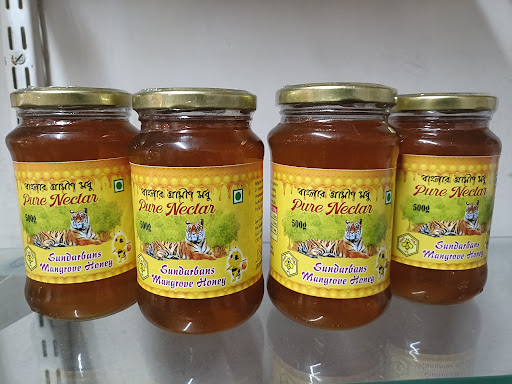
Sundarban mangrove forest honey (also called Mouban or mangrove honey) is a wild, multifloral hon…
Sundarban mangrove forest honey (also called Mouban or mangrove honey) is a wild, multifloral honey collected from the world’s largest mangrove ecosystem spanning India and Bangladesh. Bees (mainly Apis dorsata) gather nectar from mangrove flowers such as Khalsi (Aegiceras corniculatum), Keora, Goran, Bain, and Gewa. It is typically golden to reddish-brown, thicker, and has a distinctive earthy, slightly smoky or salty-tinged flavor. It holds Geographical Indication (GI) status in both India and Bangladesh. Key Health Benefits Powerful antioxidant activity — Rich in polyphenols and flavonoids. Studies show Sundarban honey has strong free-radical scavenging (including superior hydroxyl radical scavenging compared to many other honeys), which helps protect cells, supports anti-aging effects, and reduces oxidative stress. Immunity booster — Antioxidants, antimicrobial compounds, vitamins, and minerals help strengthen the body’s defenses against infections. Soothes sore throat, cough, and cold — Natural antibacterial and soothing properties make it effective for throat irritation and respiratory discomfort (traditionally taken with warm water or tea). Supports digestion and metabolism — Contains natural enzymes and prebiotic-like effects that aid digestion, relieve constipation, and may improve metabolism. Morning consumption with warm water is popular for mild detox support. Skin health — Moisturizing, anti-inflammatory, and antibacterial quali